Recently one of our faithful readers, Natalie, emailed us to share a website she'd found. It's called Knock-Off Wood. Have you heard of it?
Let me tell you a little bit about it.
The creator, Ana White, is a furniture designer and builder. In her blog bio, she says this: "I'm just a stay at home Mom with expensive taste and no money. But money (or rather the lack of money) is not going to keep me from making our home comfortable, organized and stylish."
I'm sure there are many of us that can relate!
Without any formal training, she has learned how to look at retail furniture, then go home and duplicate it. Unbelievable! Her blog is a forum where she shares her designs FOR FREE, and lets other people share their building success stories.
I fell in love with her blog after moments of perusing, not only because she has everything organized by skill level, type of furniture, style of furniture, and many more, but mostly because all of her pieces are so so inexpensive. If you look at the "search plans by estimated cost," there isn't a category over $200. Can you imagine being able to build an RC Willey bed or a Pottery Barn armoire for less than $200??
I, personally, am not a builder, but her plans are so simple that even beginner carpenters (like me) could build a lot of these pieces. Each plan has a supply list, a cut list, a tool list, and then step by step instructions on how to build the furniture. With the help of the nice men at Home Depot who will cut your wood for you (and even though they have a sign that says $0.25/cut, they never charge me), you don't even need a saw!
This website is an amazing resource for people looking for inexpensive furniture. Yes, it takes some time and effort, but I think the price makes it worth your while. Plus, you'll have unbelievable bragging rights for the rest of your life.
The second I have a new house and room for some new furniture, I'm building myself this. Or maybe one of these. Or maybe I'll just make one of everything.

Jul 29, 2010


Jul 28, 2010
Small Savings: Homemade Stock (Janssen)
There are some common grocery items where the price doesn't phase me at all. Yogurt? No problem. Sugar? Got tons.
But for some reason, I find chicken broth absurdly expensive. Or filled with chemicals. Or both. When I'm making a recipe that calls for something like 7 cups of chicken broth, I am filled with horror.
You can make your own chicken stock by boiling chicken bones, but I rarely, if ever, buy chicken with bones in it, so this doesn't really solve my problem.
I do, however, buy a lot of vegetables and there are always parts of vegetables you don't really eat on their own (the tops of celery stalks, carrot peelings or tops, the ends of onions, broccoli stems, etc). And frankly, I don't really notice a difference between chicken broth and vegetable broth.
Over the course of a week or so, I put the leftover vegetables parts in a tupperware until I have a good little pile.
I toss it all in my stockpot, cover it with water, put in some bay leaves, garlic, salt and pepper, and let it simmer for a few hours. Then I cool it, strain out the vegetables, pour the broth in my ice cube molds, and put the frozen cubes in a big tupperware in the freezer.
Then, when I need it for a recipe, it costs me virtually nothing, even if the recipe requires a ludicrous amount of broth. Plus, I get to feel good about not having wasted my vegetables. Not to mention that it's not filled with weird ingredients.
But for some reason, I find chicken broth absurdly expensive. Or filled with chemicals. Or both. When I'm making a recipe that calls for something like 7 cups of chicken broth, I am filled with horror.
You can make your own chicken stock by boiling chicken bones, but I rarely, if ever, buy chicken with bones in it, so this doesn't really solve my problem.
I do, however, buy a lot of vegetables and there are always parts of vegetables you don't really eat on their own (the tops of celery stalks, carrot peelings or tops, the ends of onions, broccoli stems, etc). And frankly, I don't really notice a difference between chicken broth and vegetable broth.
Over the course of a week or so, I put the leftover vegetables parts in a tupperware until I have a good little pile.
I toss it all in my stockpot, cover it with water, put in some bay leaves, garlic, salt and pepper, and let it simmer for a few hours. Then I cool it, strain out the vegetables, pour the broth in my ice cube molds, and put the frozen cubes in a big tupperware in the freezer.
Then, when I need it for a recipe, it costs me virtually nothing, even if the recipe requires a ludicrous amount of broth. Plus, I get to feel good about not having wasted my vegetables. Not to mention that it's not filled with weird ingredients.
Share To:


Jul 27, 2010
What is a Mutual Fund? (Carole)
Sometimes we hear financial terms (maybe even use them ourselves) and yet don't really know what they mean. Maybe the term Mutual Fund falls into this category for you. I'm going to try explain what a Mutual Fund is in less than 200 words. Here we go. . .
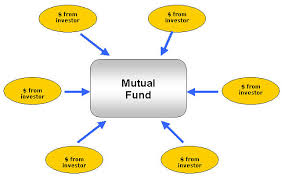
*A Mutual Fund is a pool of money (millions and millions of dollars) from thousands of investors. Get it? You are all mutually funding this huge investment vehicle.
*These millions and millions of dollars are used to buy DIFFERENT types of stocks (or possibly bonds) within this one Mutual Fund. Your Mutual Fund can own stocks from stores, high tech companies, oil companies, banks. . .whatever businesses out there are selling stocks.
*These diverse stocks are carefully chosen by a Fund Manager. His or her job is to choose wisely and broadly so that if one segment of the financial world (say, the price of oil) goes down, chances are that a different segment of the financial world (say, the value of Wal-Mart stock) goes up. The Fund Manager's needs to make sure you own both kinds of stock, so your investment money is safe -- and hopefully earning interest. Actually their job is to make sure you own dozens of different kinds of stocks that can balance one another out, which greatly reduces your risk. With this kind of diversity, the chance that you will lose all of the money you (or any of the investors) have put into the fund, are very very small.
That's it. That's all a Mutual Fund is. You can purchase Mutual Funds that specialize in a particular philosophy or segment of society: Green Products and Technology, International Companies, U.S. only based companies, Christian Principles or just about any niche you can imagine. Mutual Funds are also divided into categories based on how risky the stocks are that the Fund owns. Your investor can help you determine how much of a gambler you really are as you choose your Mutual Funds.
The reason most small investors like Mutual Funds, is because they allow you to have a very diverse portfolio of investments with very little money invested. If you had $2,000 invested on your own in the stock market, you could probably only afford to buy a few stocks in a couple of companies. But in a Mutual Fund you will own parts of hundreds or thousands of different stocks.
Mutual Funds tend to be a much safer way to invest your hard-earned $$.
*A Mutual Fund is a pool of money (millions and millions of dollars) from thousands of investors. Get it? You are all mutually funding this huge investment vehicle.
*These millions and millions of dollars are used to buy DIFFERENT types of stocks (or possibly bonds) within this one Mutual Fund. Your Mutual Fund can own stocks from stores, high tech companies, oil companies, banks. . .whatever businesses out there are selling stocks.
*These diverse stocks are carefully chosen by a Fund Manager. His or her job is to choose wisely and broadly so that if one segment of the financial world (say, the price of oil) goes down, chances are that a different segment of the financial world (say, the value of Wal-Mart stock) goes up. The Fund Manager's needs to make sure you own both kinds of stock, so your investment money is safe -- and hopefully earning interest. Actually their job is to make sure you own dozens of different kinds of stocks that can balance one another out, which greatly reduces your risk. With this kind of diversity, the chance that you will lose all of the money you (or any of the investors) have put into the fund, are very very small.
That's it. That's all a Mutual Fund is. You can purchase Mutual Funds that specialize in a particular philosophy or segment of society: Green Products and Technology, International Companies, U.S. only based companies, Christian Principles or just about any niche you can imagine. Mutual Funds are also divided into categories based on how risky the stocks are that the Fund owns. Your investor can help you determine how much of a gambler you really are as you choose your Mutual Funds.
The reason most small investors like Mutual Funds, is because they allow you to have a very diverse portfolio of investments with very little money invested. If you had $2,000 invested on your own in the stock market, you could probably only afford to buy a few stocks in a couple of companies. But in a Mutual Fund you will own parts of hundreds or thousands of different stocks.
Mutual Funds tend to be a much safer way to invest your hard-earned $$.
Share To:
Jul 26, 2010
CSN Winner!
I can't tell you all how much I enjoyed hearing all the great ways you save money and stay on track financially, from big consistent things to small one-time savings. What a fun crowd you are.
The winner is Carly, who said "We are really good at sitting down every month and going over the last month and next month's budget together. It helps that we communicate and set goals and account. Likewise we are good at sitting down periodically (it was last night) and doing longer term goals."
Congratulations and thanks everyone for their participation!
The winner is Carly, who said "We are really good at sitting down every month and going over the last month and next month's budget together. It helps that we communicate and set goals and account. Likewise we are good at sitting down periodically (it was last night) and doing longer term goals."
Congratulations and thanks everyone for their participation!
Share To:
Jul 23, 2010
Born Today!

Janssen and baby girl. 7lbs 7 oz. Thought you might all enjoy knowing that we've added a new member to our frugal family .
Carole (Happy Grandmother!)
Share To:
Speaking of Food Storage (Merrick)
Look what I found...this is really helpful if you're looking to stock up on food storage.
You can switch out things that you won't eat, and you can buy items every other week, or once a month instead of every week, or you can buy the items in smaller increments. But this gives you a good idea of how much food you should have, and what types of food you should have (obviously this doesn't include water).
Like I mentioned in my previous post, buying small amounts each week, or every few weeks doesn't cost you much more on your grocery bill, but helps you slowly build up your supply of food.
Two Years of Food Storage
This is a list of food storage items to pick up at the store every week for one year. At the end of one year, you will have food storage for 2 people for 2 years!
Week 1: 6 lbs salt
Week 2: 5 cans cream of chicken soup
Week 3: 20 lbs sugar
Week 4: 8 cans tomato soup
Week 5: 50 lbs wheat
Week 6: 6 lbs macaroni
Week 7: 20 lbs sugar
Week 8: 8 cans tuna
Week 9: 61 lbs yeast
Week 10: 50 lbs wheat
Week 11: 8 cans tomato soup
Week 12: 20 lbs sugar
Week 13: 10 lbs powdered sugar
Week 14: 7 boxes macaroni and cheese
Week 15: 50 lbs wheat
Week 16: 5 cans cream of chicken soup
Week 17: 1 bottle 500 multivitamins
Week 18: 10 lbs powdered milk
Week 19: 5 cans cream of mushroom soup
Week 20: 50 lbs wheat
Week 21: 8 cans tomato soup
Week 22: 20 lbs sugar
Week 23: 8 cans tuna
Week 24: 6 lbs shortening
Week 25: 5 lbs honey
Week 26: 50 lbs wheat
Week 27: 10 lbs powdered milk
Week 28: 20 lbs sugar
Week 29: 5 lbs peanut butter
Week 30: 50 lbs wheat
Week 31: 7 boxes macaroni and cheese
Week 32: 10 lbs powdered milk
Week 33: 1 bottle 500 asprin or tylenol
Week 34: 5 cans cream of chicken soup
Week 35: 50 lbs of wheat
Week 36: 7 boxes macaroni and cheese
Week 37: 6 lbs of salt
Week 38: 20 lbs sugar
Week 39: 8 cans tomato soup
Week 40: 50 lbs of wheat
Week 41: 5 cans cream of chicken soup
Week 42: 20 lbs sugar
Week 43: 1 bottle 500 multivitamins
Week 44: 8 cans tuna
Week 45: 50 lbs wheat
Week 46: 6 lbs macaroni
Week 47: 20 lbs sugar
Week 48: 5 cans cream of mushroom soup
Week 49: 5 lbs of honey
Week 50: 20 lbs sugar
Week 51: 8 cans tomato soup
Week 52: 50 lbs wheat
You can switch out things that you won't eat, and you can buy items every other week, or once a month instead of every week, or you can buy the items in smaller increments. But this gives you a good idea of how much food you should have, and what types of food you should have (obviously this doesn't include water).
Like I mentioned in my previous post, buying small amounts each week, or every few weeks doesn't cost you much more on your grocery bill, but helps you slowly build up your supply of food.
Two Years of Food Storage
This is a list of food storage items to pick up at the store every week for one year. At the end of one year, you will have food storage for 2 people for 2 years!
Week 1: 6 lbs salt
Week 2: 5 cans cream of chicken soup
Week 3: 20 lbs sugar
Week 4: 8 cans tomato soup
Week 5: 50 lbs wheat
Week 6: 6 lbs macaroni
Week 7: 20 lbs sugar
Week 8: 8 cans tuna
Week 9: 61 lbs yeast
Week 10: 50 lbs wheat
Week 11: 8 cans tomato soup
Week 12: 20 lbs sugar
Week 13: 10 lbs powdered sugar
Week 14: 7 boxes macaroni and cheese
Week 15: 50 lbs wheat
Week 16: 5 cans cream of chicken soup
Week 17: 1 bottle 500 multivitamins
Week 18: 10 lbs powdered milk
Week 19: 5 cans cream of mushroom soup
Week 20: 50 lbs wheat
Week 21: 8 cans tomato soup
Week 22: 20 lbs sugar
Week 23: 8 cans tuna
Week 24: 6 lbs shortening
Week 25: 5 lbs honey
Week 26: 50 lbs wheat
Week 27: 10 lbs powdered milk
Week 28: 20 lbs sugar
Week 29: 5 lbs peanut butter
Week 30: 50 lbs wheat
Week 31: 7 boxes macaroni and cheese
Week 32: 10 lbs powdered milk
Week 33: 1 bottle 500 asprin or tylenol
Week 34: 5 cans cream of chicken soup
Week 35: 50 lbs of wheat
Week 36: 7 boxes macaroni and cheese
Week 37: 6 lbs of salt
Week 38: 20 lbs sugar
Week 39: 8 cans tomato soup
Week 40: 50 lbs of wheat
Week 41: 5 cans cream of chicken soup
Week 42: 20 lbs sugar
Week 43: 1 bottle 500 multivitamins
Week 44: 8 cans tuna
Week 45: 50 lbs wheat
Week 46: 6 lbs macaroni
Week 47: 20 lbs sugar
Week 48: 5 cans cream of mushroom soup
Week 49: 5 lbs of honey
Week 50: 20 lbs sugar
Week 51: 8 cans tomato soup
Week 52: 50 lbs wheat
Share To:
Jul 22, 2010
Small Savings: Unloved Bread Ends (Janssen)
I don't know about you, but I often get down to the last slice or two of bread and it's looking a little stale, or too thin, or it's the end piece and I don't really want to use it. I'd rather just move on to a new, whole loaf.
But throwing that bread away seems so wasteful, and I always imagine my dad cringing. Which means that I sometimes find myself with two or three almost empty bread bags in the back of my fridge.
Instead of throwing them away, I've found two ways to use them to avoid having to buy other products:
But throwing that bread away seems so wasteful, and I always imagine my dad cringing. Which means that I sometimes find myself with two or three almost empty bread bags in the back of my fridge.
Instead of throwing them away, I've found two ways to use them to avoid having to buy other products:
- I take the leftover slices of bread, toss them into the food processor and blend them until they are tiny little crumbs. I then dump the whole thing into a large ziplock back and stick it in the freezer. Whenever I have a recipe that calls for breadcrumbs, there they are, ready and waiting (and homemade!).
- I make my own croutons. I take a slice of bread (the end works just as well as a regular slice of bread) and cut it into strips and then squares (I'd say about 25 squares per slice - 5 rows by 5 rows). I dump it into a bowl, mix in a little olive oil, salt, pepper, and dried herbs (basil, oregano or an Italian Mix is my standard), then toss it on a baking sheet and cook them at 350 for about 15 minutes, or until they are toasty and brown. Stir them occasionally to keep from burning. These last quite well in the fridge, I've found, staying crunchy for about a week after I make them. Bonus, you save money by not having to go to the dentist to get your broken tooth fixed - am I the only one who fears for my teeth whenever I bite into a store-bought crouton?
Share To: